 Horn und Tusk
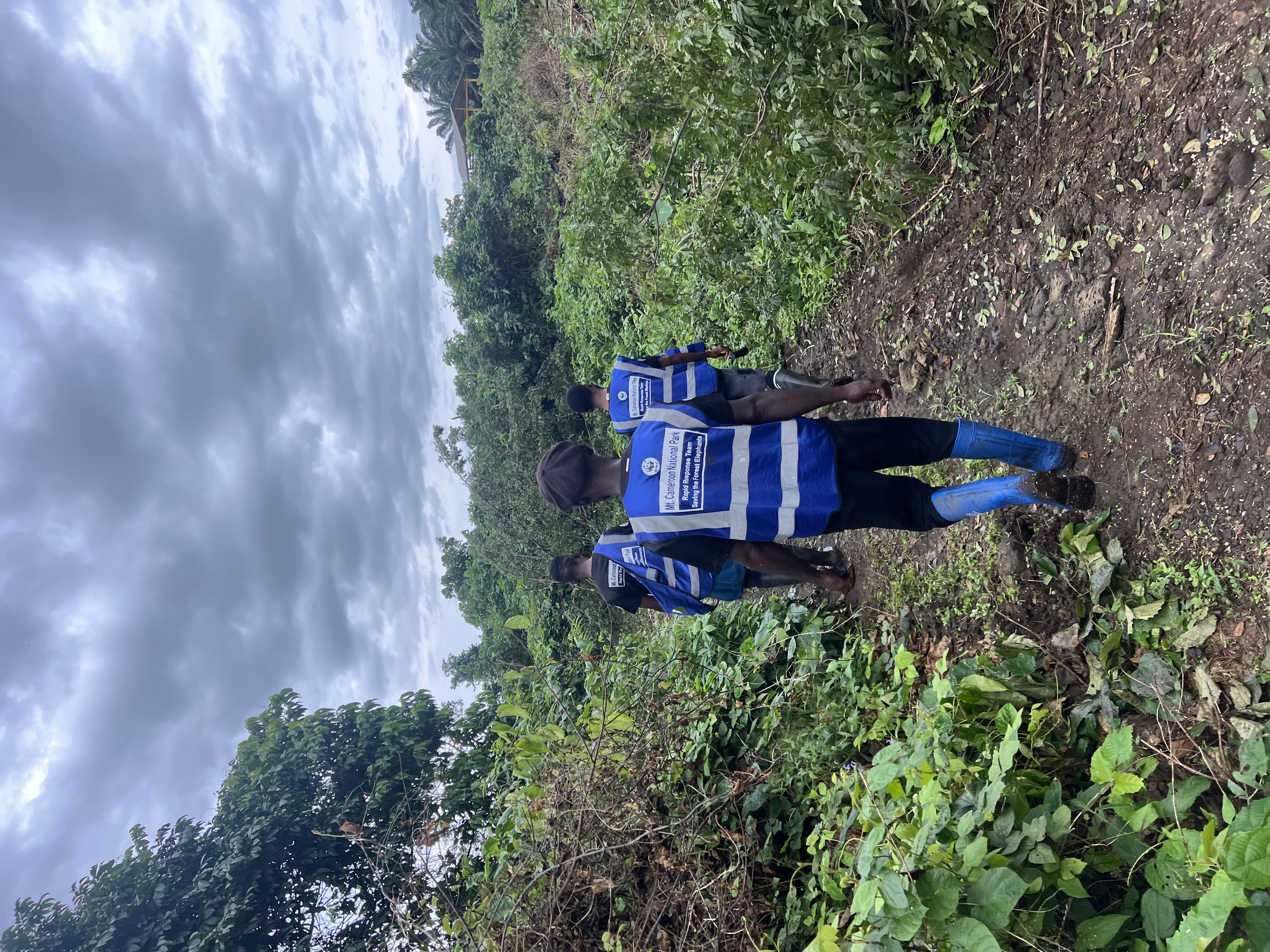
For nearly a decade, forest elephants have been coming out of Mount Cameroon National Park and into Bakingili’s farmland. They tear through plantain and cassava, often searching for the water held in the plants. A family can lose a field in a single night. After this happens again and again, many people stop planting altogether.
Eight men from the village go out at night to turn the elephants back. They work on foot with flashlights and whatever deterrents are available, sometimes close enough to make out individual animals. Cows with calves have come right to the edge of the village. So far, no one in the wider community has been hurt—but the men doing this work are taking a real risk.
We are starting with what people in Bakingili have told us they need now: safer equipment for the response team, and basic food support for families whose lives have been upended by the conflict.
We are beginning with immediate needs. The longer-term work will be shaped by the people who live here.
A 2011 survey counted around 110 forest elephants in Mount Cameroon National Park. More recent estimates put the population above 300. That growth is encouraging for conservation, but it has also brought more elephants into contact with farms along the park boundary.
Replacement land has been allocated to Bakingili, but it is far enough away that many people cannot reach and work it without transport. Fishing has also been proposed as an alternative, but it has not replaced what families once grew. The result is an ongoing food problem, not simply an occasional damaged field.
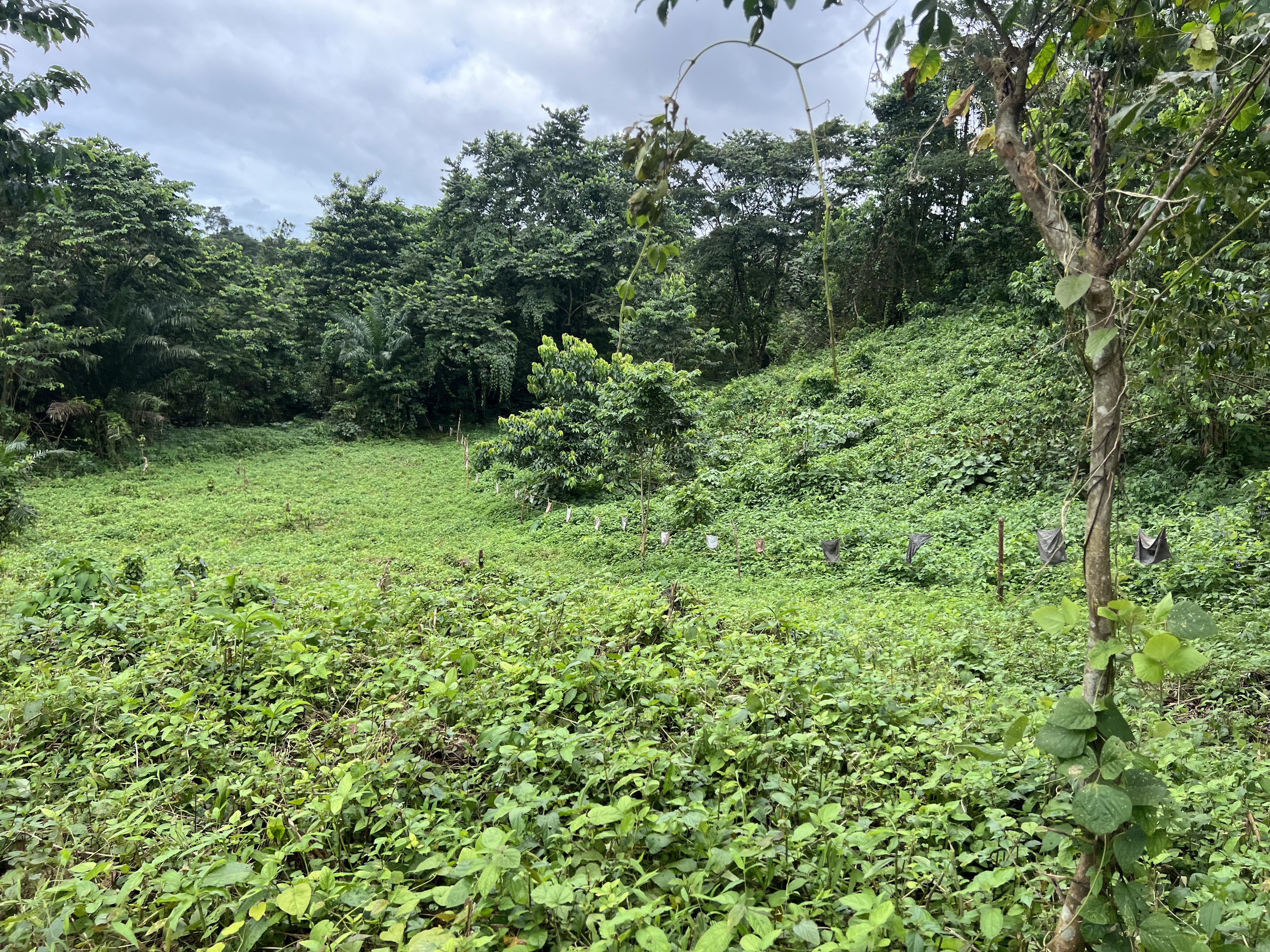
Rag "Fire Wall" — a temporary deterrent used nightly by farmers
The Bakingili Rapid Response Team is made up of eight men from the community, including farmers, younger residents, and former hunters. At night, they go out on foot and try to turn elephants away before they reach the remaining farms.
The team covers Bakingili and Debundscha and also supports the Njonji team toward Idenau. They were our first partners in the area. Much of what we understand about the conflict comes from walking the land with them and listening to what they have seen.
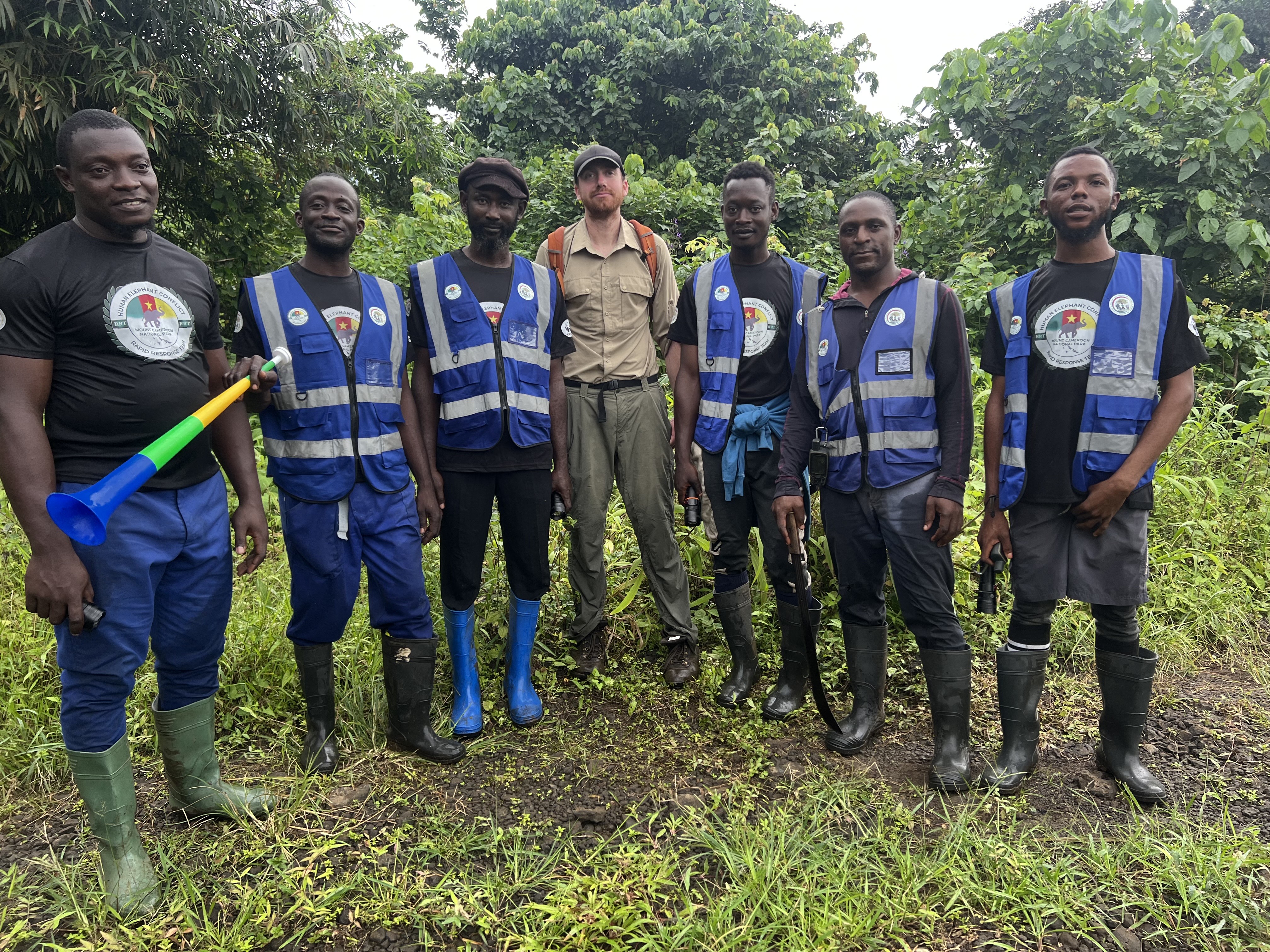
Bakingili Rapid Response Team
Bakingili is a coastal village of around a thousand people, between the Atlantic and the slopes of Mount Cameroon. The community predates both the surrounding plantation estates and the national park. People have long relied on the sea for fish and on the area’s rich volcanic soil for farming.
Today, much of that farmland is no longer being used, and families are making do with less. Outside support has largely focused on the response team, while many families feel that the losses they have suffered have gone unanswered. This has created frustration—not because people oppose the team’s work, but because they are living with the same conflict and want their needs to matter too. Supporting the team without supporting the community around it would address only half the problem.

Bakingili — [CAPTION]
Bakingili lies west of Limbe on a narrow strip of land between Mount Cameroon National Park and the large plantation estates along the coast. The map shows elephant sightings reported in and around the village and its farms. It gives a clearer sense of how close the animals are coming to the places where people live and work.
Elephant Sightings — tap a marker to learn more
In parts of eastern and southern Africa, teams have used thermal-equipped drones to locate elephants at night and help move them away from farms. There is now a meaningful body of field experience behind that work.
The documented cases we have found involve savanna elephants in relatively open habitat. We have not found a published example involving African forest elephants in Central or West Africa. The limitation is obvious: thermal imaging cannot see through a closed forest canopy.
Bakingili may offer a practical place to test the idea because the conflict happens at the forest edge and in open fields at night. A drone would not need to see through the canopy; it would need to spot elephants as they emerge. We want to test that carefully, document what works and what does not, and share the results. If similar work has already been done with forest elephants, we would genuinely like to hear about it.
Rice and beans will be bought locally and distributed in the village. Equipment purchased for patrols will belong to the Bakingili Rapid Response Team rather than to an individual or an outside organisation, so it remains with the team if membership changes.
This project is meant to complement the existing WWF-supported response programme, not replace it. Our focus is on needs that are not currently covered: immediate food support for affected families and practical safety equipment for the response team.
Phase 1 will provide rice and beans to affected families and the equipment the response team requested first: dependable flashlights, boots, and a laptop for keeping records.
♥ Support the Team and the Village